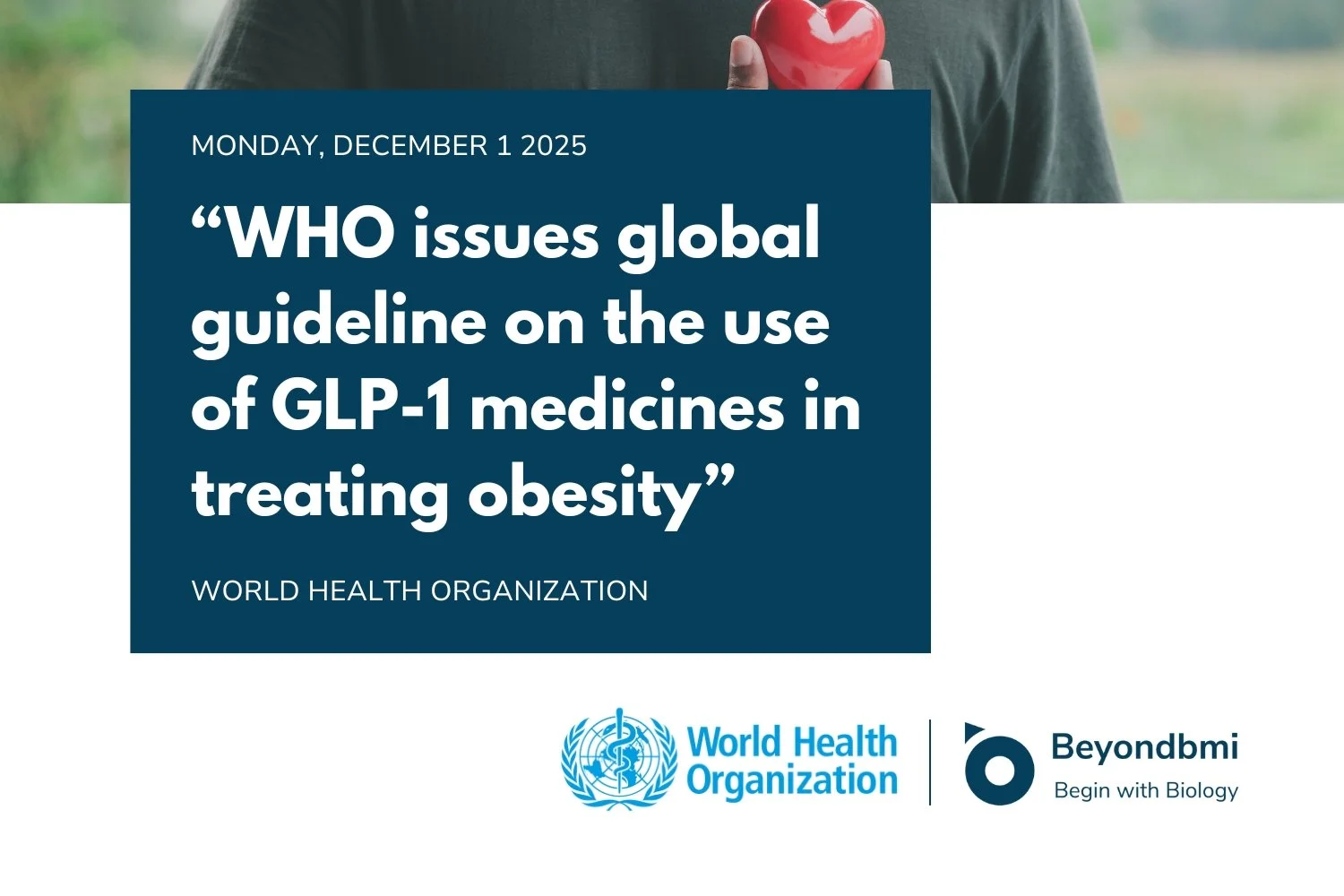
A new WHO guideline on GLP-1 weight loss medicines
The World Health Organization released its inaugural global guidance on GLP-1 therapies for obesity treatment on 1 December. The guidance specifically addresses three medications: liraglutide, semaglutide and tirzepatide.
The WHO’s recommendations aim to address a public health crisis affecting over 1 billion people globally, responsible for 3.7 million deaths in 2024.
A conditional green light, not a blank cheque
The WHO endorses GLP-1 therapies for adults with obesity, though this recommendation is explicitly conditional. Key concerns include:
- A need for further data on their long-term use in obesity treatment
- Their high cost
- Inadequate health-system preparedness to manage their rollout
- Potential equity implications that could worsen health disparities
Medication alone is not the answer
While medication alone won’t solve this global health crisis, GLP-1 therapies can help millions overcome obesity and reduce its associated harms.— Dr Tedros Adhanom Ghebreyesus, WHO Director-General
The WHO envisions a comprehensive strategy built on three pillars:
- Creating healthier environments through robust population-level policies
- Protecting high-risk individuals with targeted screening and early intervention
- Ensuring access to lifelong, person-centred care
The guideline notes that intensive behavioural interventions — including structured diet and physical activity programmes — may accompany medications to enhance outcomes.
A massive equity crisis is looming
The WHO projects that even with rapid production expansion, GLP-1 therapies will reach fewer than 10% of eligible individuals by 2030. Without proactive policies, these expensive treatments could exacerbate existing health disparities, limiting access to wealthier populations.
The organisation recommends pooled procurement, tiered pricing and voluntary licensing strategies to expand access.
A disease, not just a lifestyle choice
The guideline classifies obesity as a chronic, relapsing disease requiring comprehensive and lifelong care. This reclassification shifts responsibility from individuals to healthcare systems — demanding insurance coverage, long-term care models and reduced social stigma.
The rise of fakes poses a serious threat
Intense global demand has created a dangerous secondary market for counterfeit medications. The WHO warns about the spread of falsified and substandard products, threatening patient safety and public trust.
Recommendations include regulated distribution, prescription-only availability from qualified providers, government oversight, patient education and global cooperation.
A new tool, but not a simple fix
GLP-1 therapies represent a major advancement, but their impact depends on healthcare system adoption and support. Comprehensive, equitable, sustainable care systems remain underdeveloped globally.
How Beyondbmi’s programme aligns with WHO guidance
- Doctor-led GLP-1 prescribing. Clinicians assess medical history, medications and risk factors before treatment, with regular progress reviews.
- Integrated behavioural and psychological support. GLP-1 treatment combines with nutrition therapy, health coaching and psychological support.
- Continuous monitoring and education. Members receive education on side effects, dose titration and tracking of weight, metabolic markers and quality-of-life outcomes.
Considering GLP-1 weight loss treatment?
The WHO confirms obesity as a medical condition requiring evidence-based, long-term treatment. GLP-1 therapies within a structured, medically supervised programme may be safe and effective for many adults with obesity.
GLP-1 within a full programme
Beyondbmi delivers GLP-1 treatment with the doctor-led, multidisciplinary support the WHO recommends.
Book your doctor consultation →References
- World Health Organization (2025). WHO global guideline on the use of GLP-1 medicines in treating obesity. Released 1 December 2025.